
Zach and I climbed the Ingraham Direct to the summit of Mt Rainier in 17 hours car to car on May 10-11th, 2019. I’d been wanting to climb Rainier in a single push with extremely light packs, and things lined up perfectly to make it happen. Zach was psyched, the forecast was perfect, and conditions were great.
After getting permits, eating dinner and packing gear, Zach suggested that we start moving at 7pm. We’d originally planned on leaving the car closer to 9pm, but we couldn’t come up with a good reason to wait. After arriving at Muir at 11pm, we melted some water and I dealt with some bad nausea that was undoubtedly caused by the shock of moving from near sea level to 10,000 feet in only a few hours. Nevertheless, we departed Muir around midnight and pushed up the Ingraham glacier. Ascending the Ingraham icefall involved plenty of switchbacks and some crevasse crossings that had ladders over them, thanks to the guide services. Neither of us had previously used a ladder to cross a crevasse, which seemed much scarier than the normal jump across that I’m accustomed to.
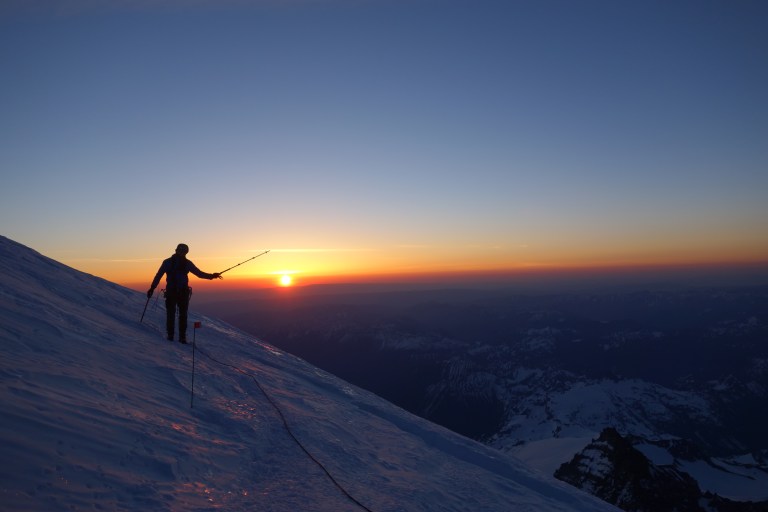

We finally arrived on the true summit at 6am, eleven hours after leaving the car. I felt surprisingly good aside from a minor headache and some dizziness. We descended back into the crater to melt water before starting the loooong descent. We finally arrived at the car at noon. Soon we were on the road back to Spokane, where we were home in time for dinner.
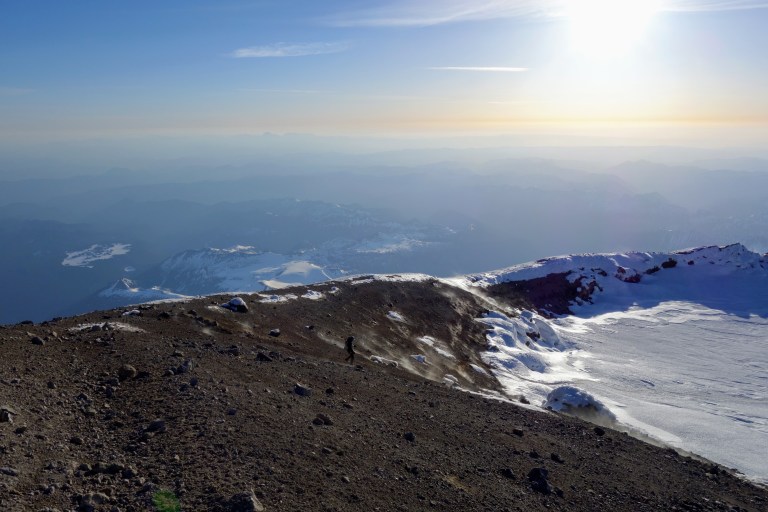


This trip was an interesting contrast to my first Rainier experience in 2018 on Liberty Ridge, which is located on a much less popular side of the peak. The views were incredible and the opportunity to test our endurance with such light packs was a special treat, despite the crowds that these easier routes draw.
Strategy Notes
Leaving the car at 7pm was perfect for us – it makes sense to try to summit at or around sunrise. This time of year, the route is maintained by guide services, removing any need for routefinding skills. Wands were present every 100 feet or less and the bootpack provides a clear path to the summit. Fixed pickets were present for major crevasse crossings to protect you as you cross the ladders placed for your convenience.
Gear Notes
Bring a rope and equipment to effect a rescue if someone falls in a crevasse. Our packs weighed (roughly) 13lbs including food and water for the day.
 SPOKALPINE
Nice write up! I’m planning to do something similar and had a few questions:
1. Do you remember how much water you started with? melting snow seems like the easiest way to shed weight in the pack
2. Did you wear mountaineering boots the whole time or hiking shoes for the first part?
3. Did you leave any gear at Camp Muir while you did the summit push?
LikeLike
Hey Pat, awesome! I can’t recall the amount of water we brought, though we did brew up at Muir and in the summit crater. I can’t imagine that I was carrying more than 1.5 L on the way up but 2 is probably better. I don’t like to be thirsty. We had continuous snow from the parking area, so I wore La Sportiva G5 boots the whole way. No gear stash at Muir for us. Have a great time!
LikeLike
Thanks for the response! Just seeing this, it went to my spam for some reason. Ended up doing the car 2 car in about 21 hours. Definitely did not bring enough water which really slowed us down as we started feeling pretty crappy once we got dehydrated. We ended up wearing hiking boots to the start of the snowfield then switched to our Sportiva’s and stashed some stuff at camp muir. I was very pleased with this decision. Awesome trip overall! No idea how you got your pack so light, we were much closer to 30 pounds than we were to 20, but we didn’t actually weigh it.
LikeLike
13lbs including ropes? or without? Thats just crazy light. Do you have a gear list you carried? 🙂
LikeLike
Definitely not including ropes!
LikeLike