

When I climbed Inspiration Peak back in July, I spotted a sharp fang of granite nearby: Mount Triumph, a somewhat low peak for the North Cascades at 7240 feet. What Triumph lacks in height is easily surpassed by the steepness on all sides and incredible location. Fred Beckey rightly describes the mountain as “one of the outstanding sights of the North Cascades.” I love a mountain like this! Steep, hard to reach and no easy way up or down. I teamed up with Matt Zavortink to climb Triumph’s Northeast Ridge on September 1, 2024.

Matt and I didn’t really know each other before we went to Denali on an amazing team of mutual friends in 2022. You get to know someone pretty quickly when spending every waking moment together in a high stress environment! We hadn’t seen each other since that expedition and I was really stoked to link up with him again. More than just a climbing fiend, Matt is a chess master, experienced mountain rescue volunteer and ramen connoisseur. If I’m going to spend multiple days in the mountains with someone, being able to talk about something other than climbing is an absolute must!
Typical North Cascades day one: drive to the mountains, obtain permit, grind out the approach to high camp. We started out from the Thornton Lakes trailhead. The Thornton Lakes are stacked atop each other in a high valley – a very cool piece of geography. This trail starts off with mellow hiking before descending sharply to the lowest lake and disappearing along the shore. A faint climbers trail thrashes through foilage as it leads around the lake, sometimes requiring fourth class climbing, to reach the middle Thornton Lake. From here, a steep scree gully charges up 1200 feet to the col where we finally laid out our sleeping bags after a five hour effort in the afternoon heat.
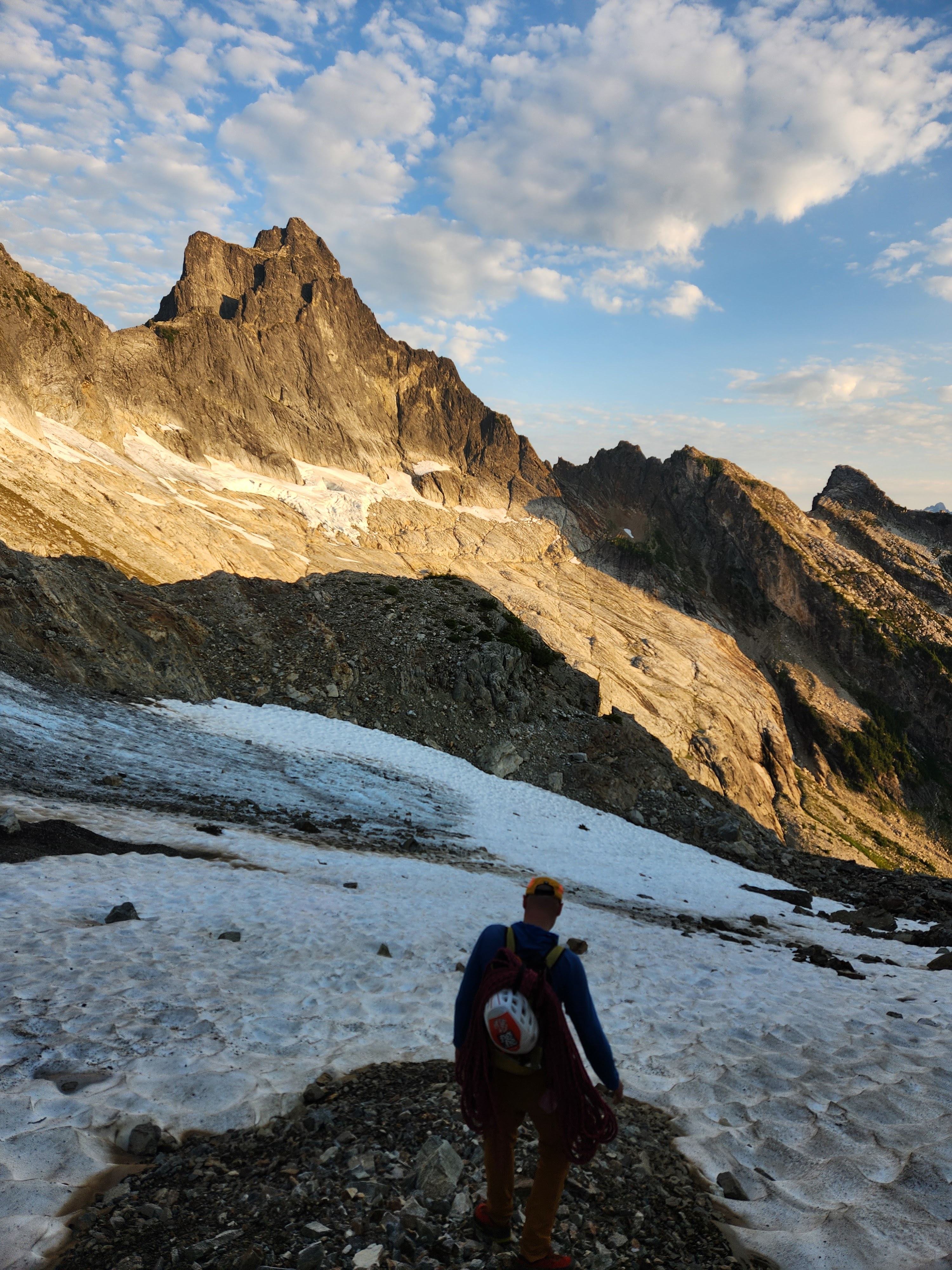
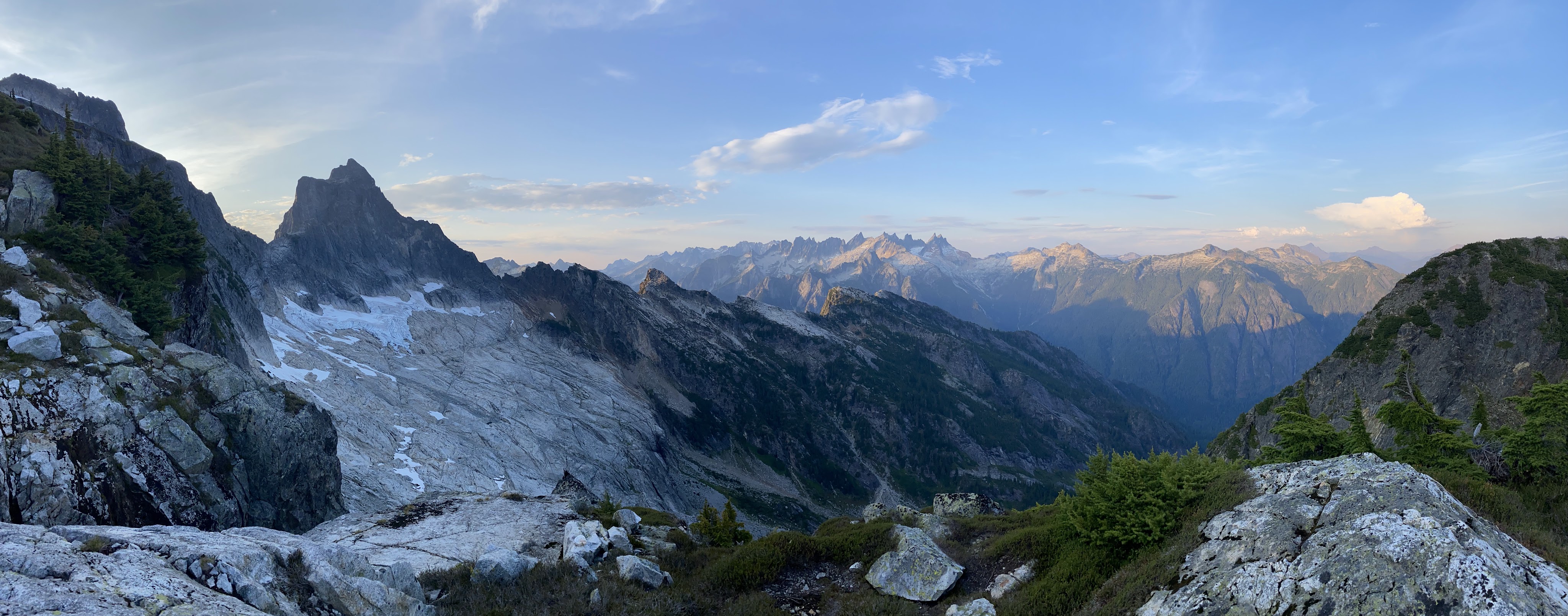
The next morning, we dropped off the far side of the col to sketchily navigate the margin between an icy, permenant snowfield and an unstable scree slope. Matt was sweating bullets as he followed behind me and heard the slope settling 30 feet above where I was moving. It seemed that a rock avalanche could kick off if I made the wrong move, but this seemed safer than going down the icy surface itself in my approach shoes. From the bottom of the snow slope, we traversed glacial slabs across the basin until we transitioned to fourth class scrambling that brought us to the start of the route.
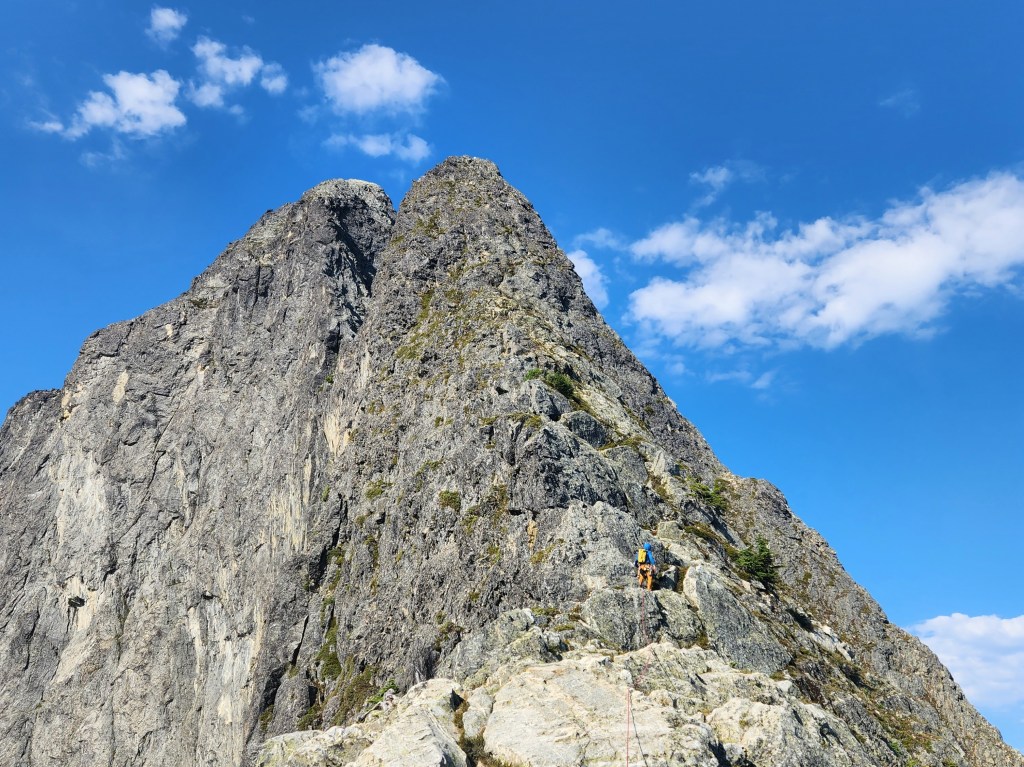
From the notch, I set off on a big simulclimbing block up the lower ridge which ranges from walking terrain to mid fifth class. The ridge steepens as it gets higher, with awesome moderate climbing over towers. Matt took off on a second simul pitch across the knife-edge ridge and to the base of the crux pitch.

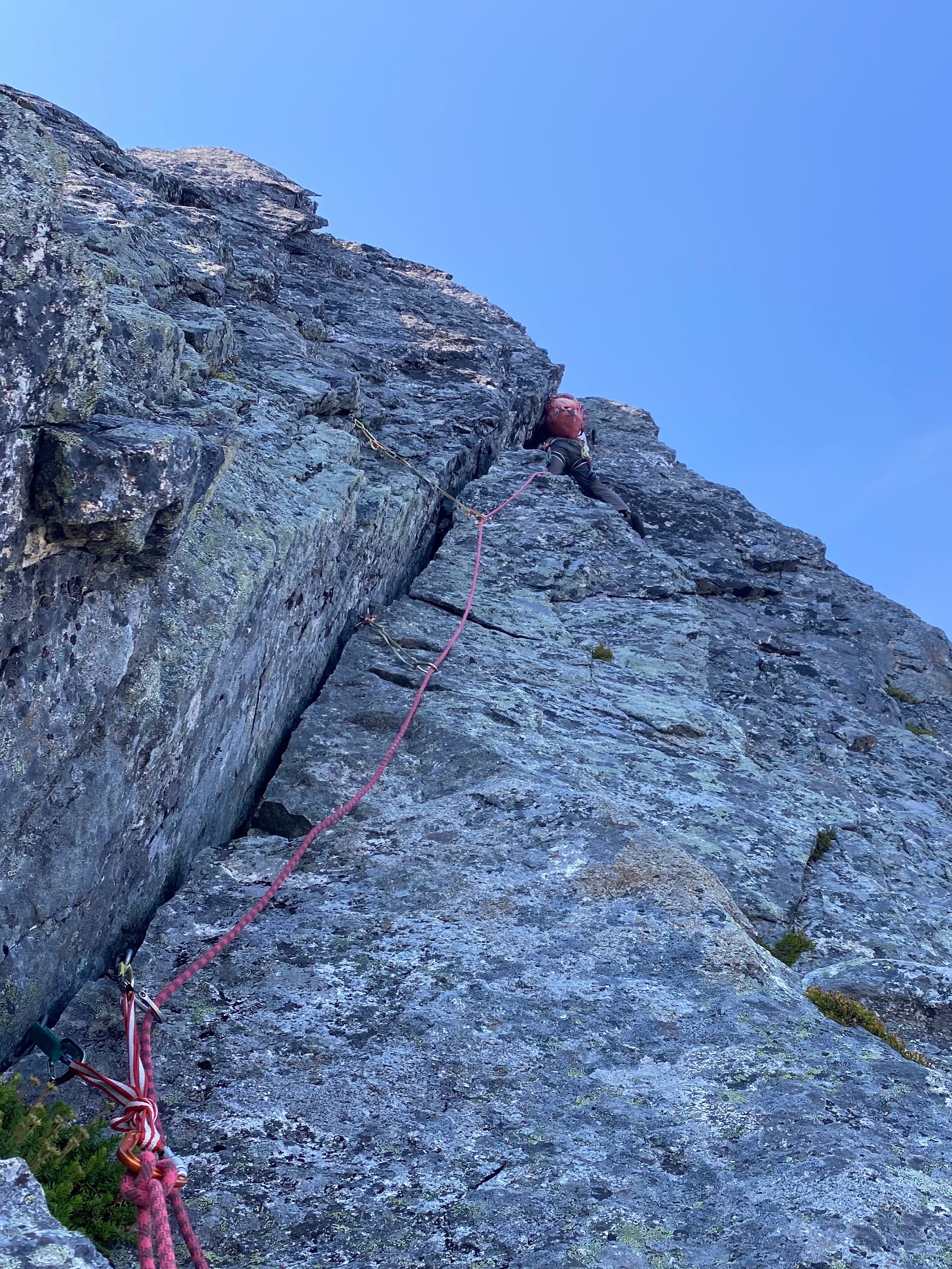
Matt volunteered to lead the crux 5.7 pitch since he was the only one with climbing shoes. I followed quickly in my approach shoes and set off on another section of simulclimbing toward the summit. The route traverses above the West Face here and becomes incredibly exposed on some junky rock.

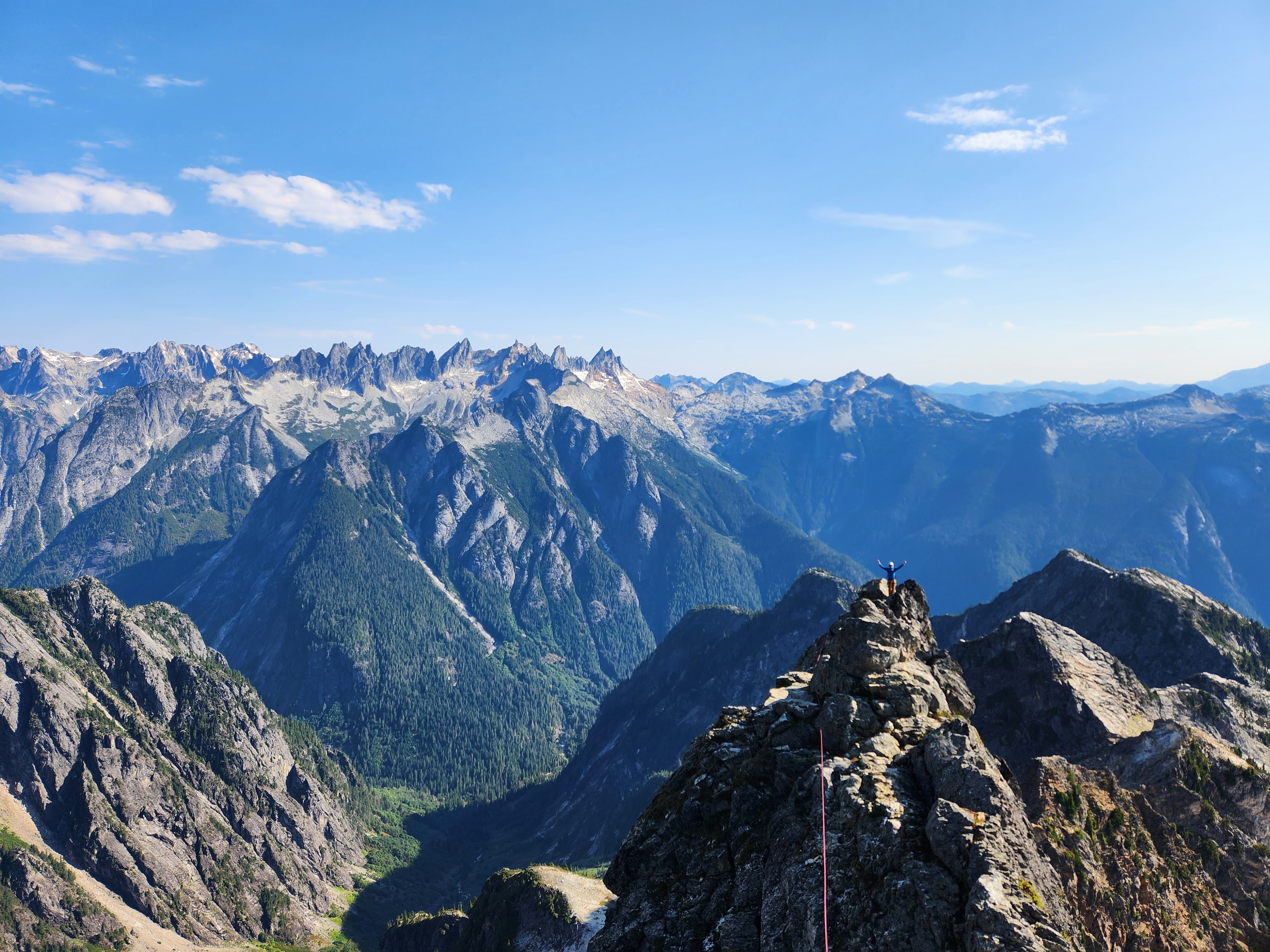
Loose, sketchy, heather-covered rock climbing is sometimes a necessary evil in the Cascades; the final slopes on Triumph are a prime example. The last 300 feet of climbing eerily reminded Matt and I of our respective adventures on the NE Rib of Johannesburg Mountain. This stuff isn’t hard, just dangerous. Matt led our final simulclimbing pitch to an incredible perch on the summit. The South Pickets were on full display, with Mt Baker and Shuksan showing off their glaciers in the other direction.
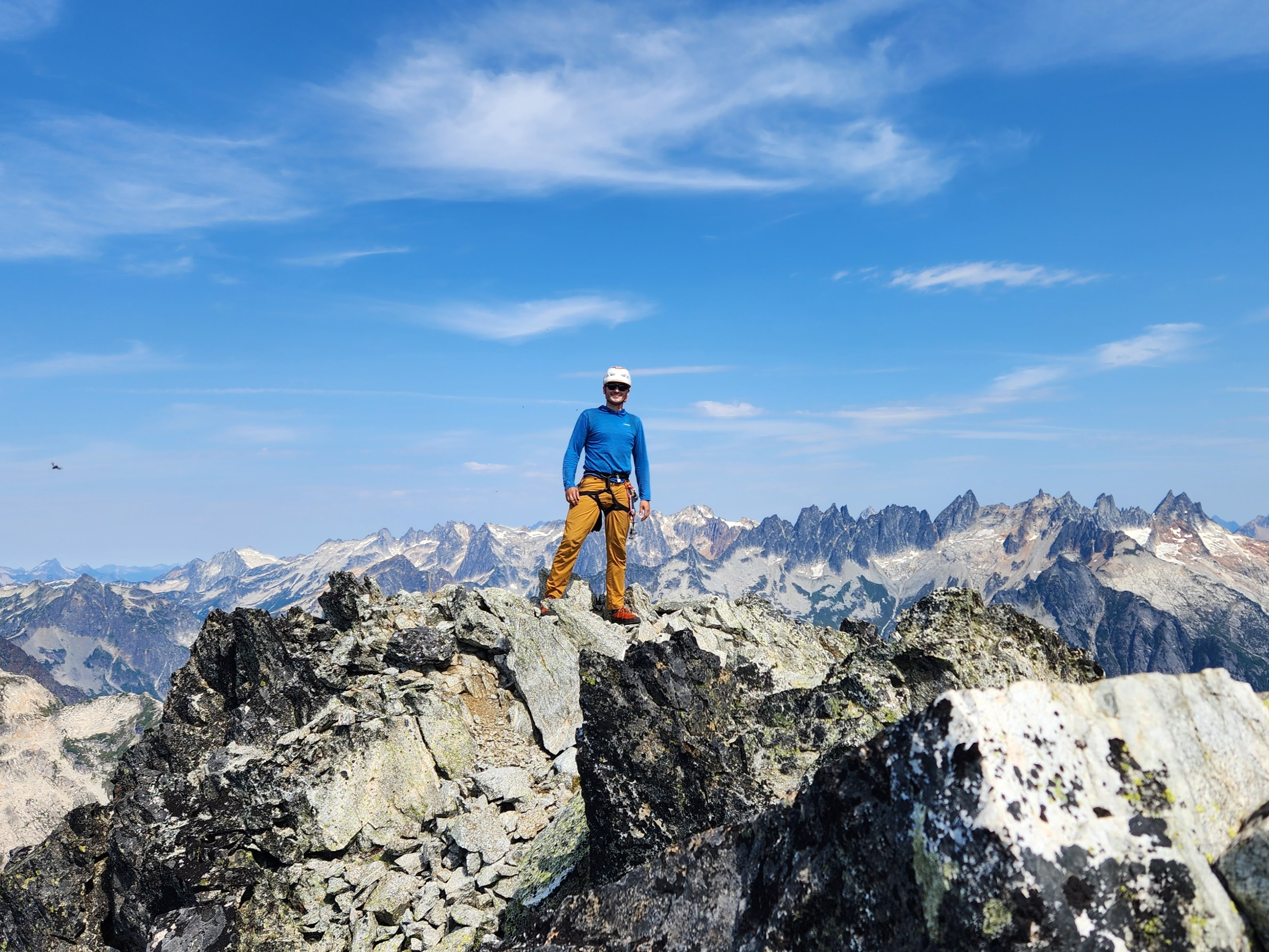
Our descent method: simulclimb from the summit to the top of the crux pitch. Rappel, scramble a short distance and rappel again. Simulclimb across the knife edge and down a steep wall past rappel anchors. Two more rappels lead to a good spot to put the rope away for a while. Follow intermittent trail down third class heather ledges. At the next steep section, there’s a big tree with a rap anchor. Choose between a rappel or some steep, loose, exposed downclimbing – I’ll rap this next time. Another long section of hiking and scrambling leads to two final rappels that will deposit you perfectly at the base of the route.

After downclimbing the red ledges, we took a more efficient route to return across the slabs. Even better, the permanent ice below the col had softened, which allowed Matt and I to quickly stomp straight up it in our aluminum crampons. We spent one more night at the col and hiked out the next day.

Gear Notes
70m rope, cams .3-2, nuts. I got away with approach shoes but I would want climbing shoes to lead the crux pitch. Aluminum crampons, optional ice axe in late season.
Strategy Notes
When accessing the base of the route, the best route to gain the red ledges is to ascend 3rd-4th class slabs to the left of the obvious gully.
 SPOKALPINE