
“For me, being in the mountains has always been a time for renewal, a time to leave civilization behind and to become a wanderer in the wilderness, a time to confront and adapt to the elements. Trodden paths, trodden routes distract. People distract. I’ve always preferred big isolated glaciated mountains, in part because the sign of man passes quickly, in part because they are constantly changing yet eternal, but primarily because they touch a personal aesthetic chord.” – Walter Gove, 1980
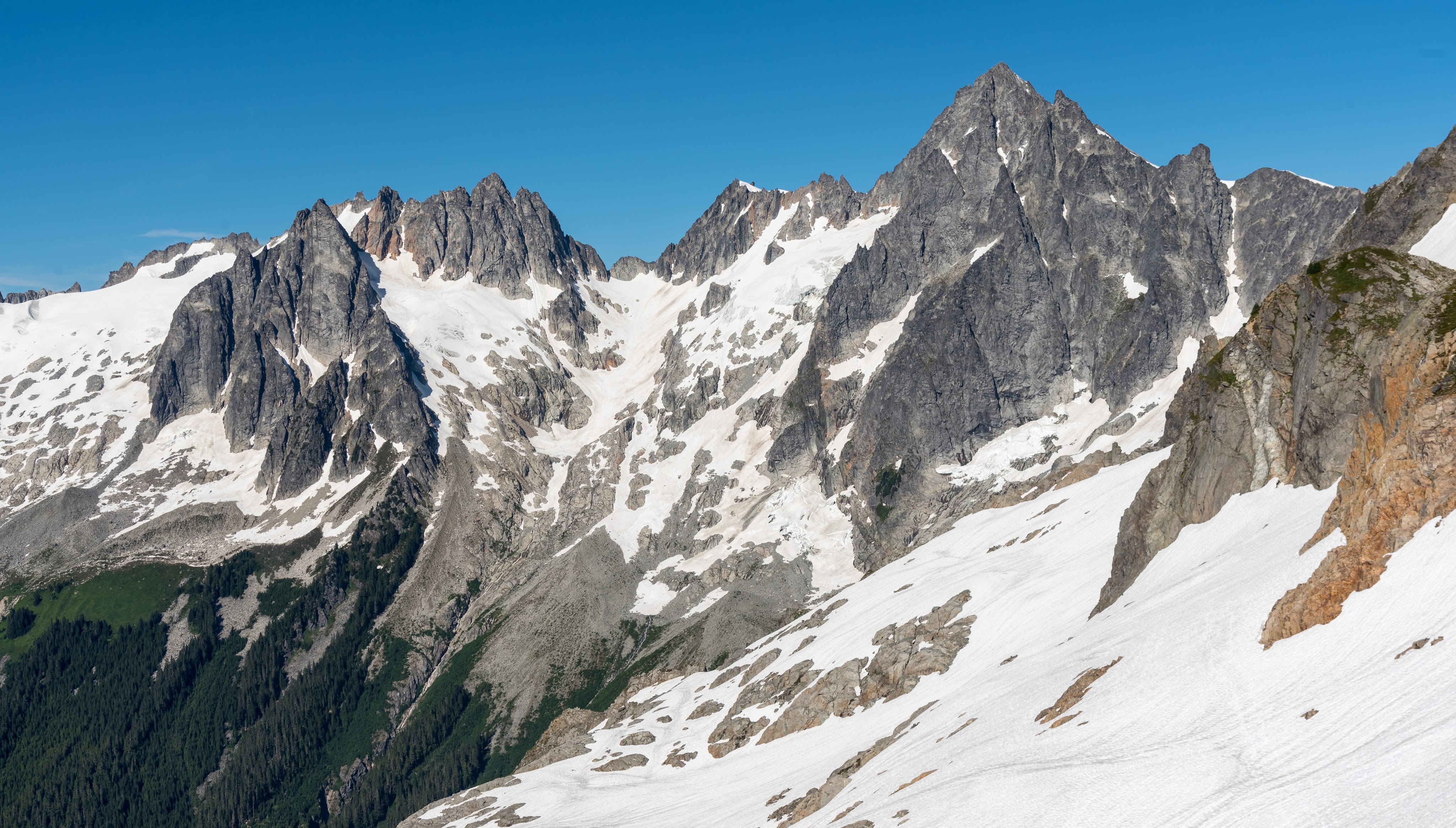
Eldorado Peak, the “Queen of the Cascade River” according to Fred Beckey, is a truly beloved mountain. The peak’s prominence and beauty command attention in an area already full of mind-blowing views – for my money, this is the most spectacular zone in the Cascades. Eldorado’s East Ridge provides an accessible and classic glacier route to the summit which allows many climbers to bask in the peak’s regal presence. Despite the popularity, most climbers have no idea that there is a dark side of Eldorado Peak: the West Face. Brooding over Marble Creek Cirque, the steep and rocky West Face has a completely different character than the friendly Eastern aspect. On this face, the West Arete is the route of choice for those bold or foolish enough to make an attempt, with 3000 feet of rock soaring directly to the summit. Darren Harnois and I climbed Eldorado Peak’s West Arete on July 26, 2025.

Years ago, when I first heard of Eldorado’s West Arete, it was quickly apparent that the route is a source of controversy. Almost nobody tries to climb it, so it all feels a bit mysterious. Those that had been there couldn’t seem to agree. Is the route a classic, king line on one of the major peaks of the North Cascades? Or is it a dangerous errand on bad rock? Is there any good climbing up there, or just terrifying choss? A surprising number of climbers suffer an unexpected bivouac on route due to the length and complexity of the climb. Deepening the mystery, the West Arete was featured in Selected Climbs of The Cascades, Volume One, only to be removed without explanation in the second edition of the book. With so much conflicting information and hearsay, I decided that I had to find the answer myself. Darren was easily convinced so we joined forces and made our 4.5 hour approach to camp at the base of Eldorado’s East Ridge.
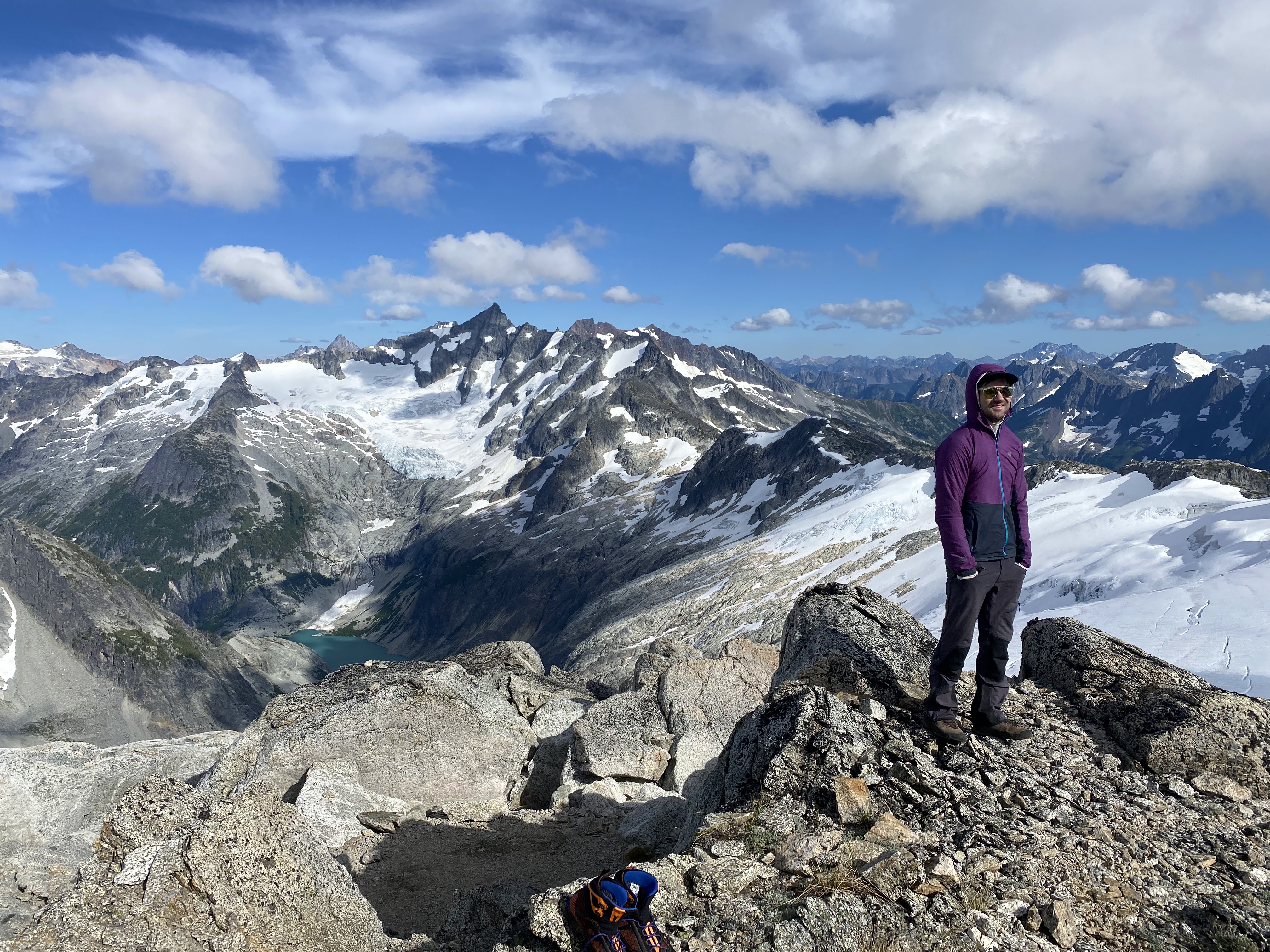
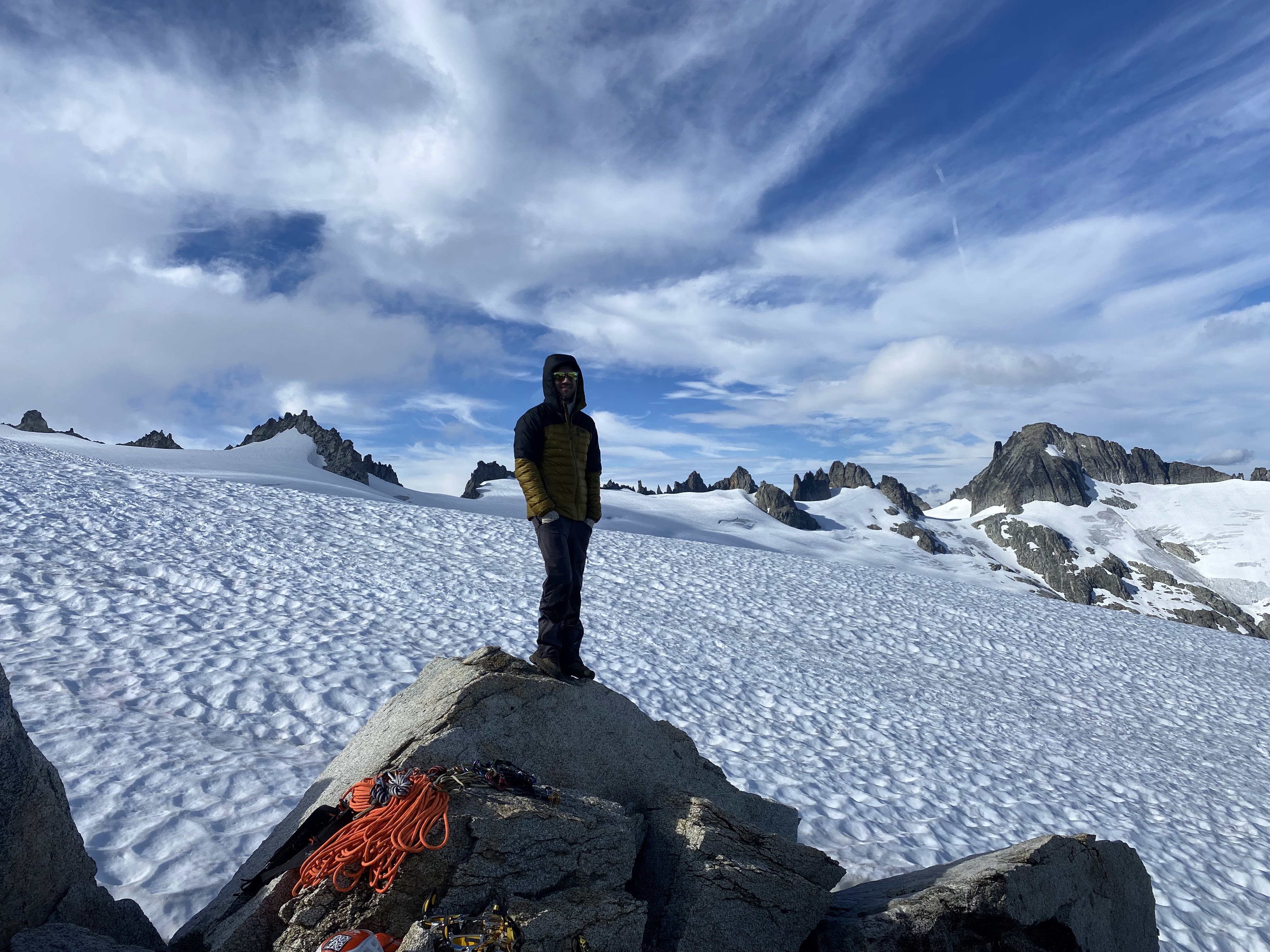
After leaving camp the next morning, we traversed the Inspiration Glacier, crossed onto the Mcallister Glacier, and descended to Dorado Col at the base of Dorado Needle’s East Ridge. A loose fourth class downclimb into Marble Creek Cirque brought us to snow and our first views of the route. As we descended toward the toe of the West Arete, Darren’s modified crampons fell apart. Thankfully, the snow was beginning to soften and the terrain was mellow, so he was able to continue without crampons. From the base of the route, some spooky scrambling on glacier-polished slabs brought us to a steep, open chimney feature. Darren led us up to the ridge crest on unbelievably loose 5.6 terrain – we both felt that this was the loosest pitch either of us had ever climbed, and that’s saying something! Hopefully things would improve as we got higher.


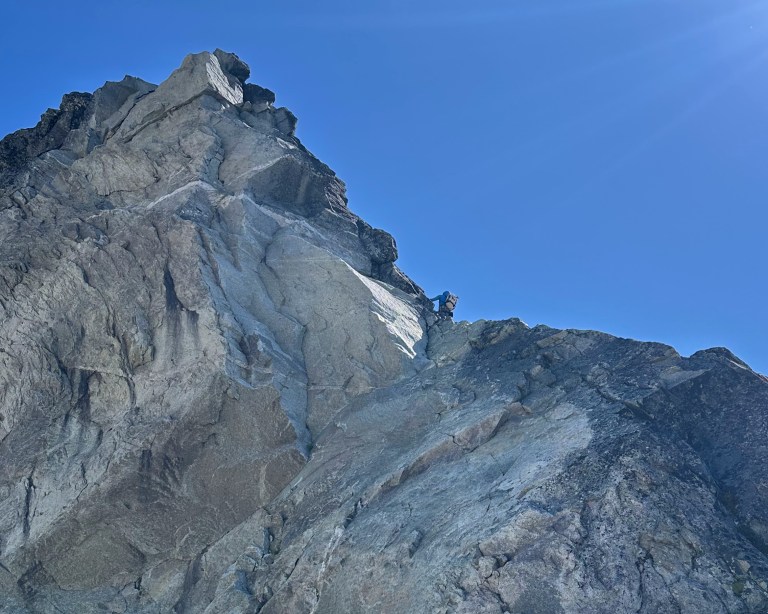
Darren and I swapped leads up the ridge for a thousand feet with confusing routefinding as a constant theme. Pitches seemed to blend together in a blur of loose rock, poor protection, sandy gullies, and rock climbing up to 5.7 to reach the most difficult section of the route: the towers. Here, the route gains very little elevation as you climb up, through or around the towers with relentless exposure on each side. The rock quality markedly improves here, but there’s still plenty of loose rock! Darren began this section by launching up the first tower, climbing high and then sneaking by the pinnacle on the left. The finale of this 70m pitch was the crux of the climb: an old-school 5.8 face traverse. Thankfully an in-situ piton gives some hope as you delicately make your way across the short crux.


From the belay at the end of the crux traverse, I squirmed up a chimney formed by the space between two towers and exited onto the other side of the ridge. After topping out the next tower and making a short rappel, we gazed up at another intimidating tower. Darren led a very fun 5.8 pitch up a left facing corner, then wrapped around the tower on the right. Now that we were through the towers, I felt some relief since the hardest section of the climb was done. At the same time, we were even more committed than before – descending from this high on the route would be a dangerous nightmare, costing your entire rack and then some if you could pull it off. In other words, we were going up no matter what. We had at least another 1500 feet of climbing to go and the summit was nowhere in sight.

Our route descriptions indicated that this final section of the route was fourth class – we looked up at the steep ridge, only seeing options for legit fifth class rock climbing. With no time to screw around looking for easier options, Darren began block leading pitch after pitch of 5.0-5.7 terrain. We had hoped to be simulcimbing by now, but the climbing was hard enough (and the rock loose enough) that it was an easy choice to keep belaying. At the end of pitch 16, another short rappel bypassed steep snow and brought the summit into view, about 600 vertical feet above. With simul climbing mode finally engaged, we did three dangerously loose simul pitches straight to the summit. At one point, I watched with terror as Darren surfed atop a large boulder as it began sliding off the mountain while he was leading. Somehow the boulder stopped itself after a few feet and Darren carried on as if nothing had happened. I think we had been in serious, stressful terrain for so long that nothing was going to frazzle us at this point.

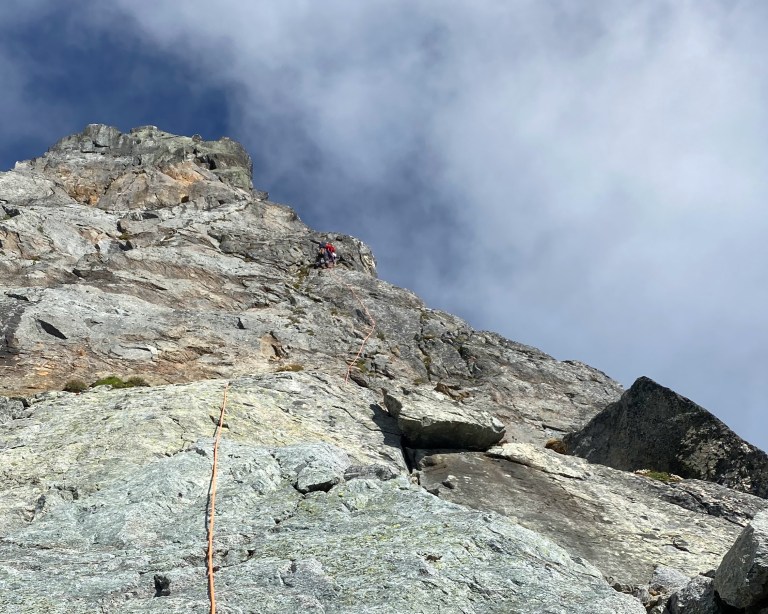
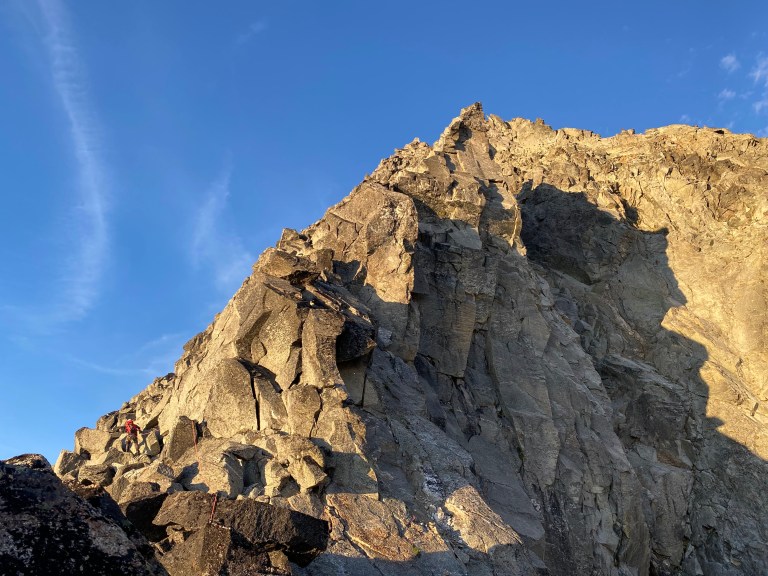
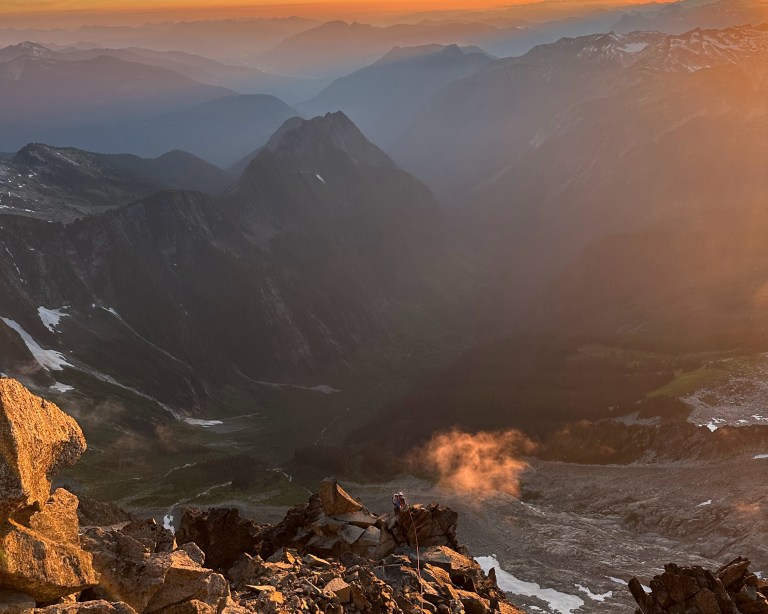
I joined Darren on the summit right at sunset – whew! Both of us were happy to have finished the route without a bivy. Now that we were on the summit, the descent of the East Ridge would be straightforward and very safe compared to the gauntlet we’d just run. Darren managed to cobble his crampons back together with shock cord (!) and we cruised back to camp without incident.


After the climb, I thought about how bad ass the first ascentionists of this route must have been. On August 24, 1969, Richard “Dick” Emerson and Walter Gove climbed the route in 10 hours base to summit with rudimentary equipment, a lot of skill, and serious tenacity. Elsewhere in the United States and abroad, each of the climbers participated in major expeditions and made numerous first ascents. I was absolutely fascinated by Walter’s report of a 1979 attempt on Mt St Elias, in which he discusses his motivations for climbing and how those motivations influence the types of climbing he found most inspiring. Beyond Walter’s extensive climbing obsession, he also made substantial contributions to the field of sociology over the course of a 35-year professional career. Pretty interesting characters.
Walter wrote a report of the first ascent of Eldorado’s West Arete for the 1971 American Alpine Journal, noting that the route compares favorably to the North Ridge of Stuart and the Northwest Arete of Forbidden. I can’t say that I agree with that assessment in terms of rock climbing quality; the West Arete has a few good pitches of rock climbing, but the route is generally pretty loose, dangerous, and stressful. However, I absolutely agree that the “line” drawn by the route on Eldorado’s West Arete stands shoulder to shoulder with these other Cascades classics. While I personally would not repeat this route, nor really recommend it to a friend, it is an alluring goal for the Cascades adventure climber. My favorite part of the route was the Towers, closely followed by being done with the damn thing.

Gear Notes
Single set of cams .2-3, doubles .5-1, nuts, single rope, glacier travel equipment. Light shoes for the approach to camp, light mountaineering boots for glacier work and rock shoes for the route.
A 70m rope isn’t necessary but we stretched the whole thing out many times on route. I wouldn’t go shorter than 60m.
Strategy Notes
There are two main approaches to reach the route. We chose to approach via Eldorado Creek, Roush Creek, and Eldorado Glacier to camp at the base of the East Ridge of Eldorado Peak. From there, it took us a little over two hours from camp to the base of the route via Dorado Col. This seems much more straightforward than the approach via Sibley Creek and Triad Col.
We climbed the route in 17 hours roundtrip from the base of Eldorado’s East Ridge. This route is a good candidate for mid-season climbs, when the route is snow-free and the days are long. After the climb, we tallied up 19 pitches including three long simul pitches.
 SPOKALPINE
Nice report. I climbed the route with Rich Laver and Sandy Kline about 40 years ago. They were the experienced leaders so I was in the middle of the rope. We planned a bivouac halfway up the ridge and that was okay. I don’t remember it being as loose or unpleasant as you say, but what did I know. And my partners were good leaders. What a thrill to step on the summit. I think it is one of the most beautiful routes in the Cascades (and I have done about 50). I got to meet Fred Beckey at a lecture once and had the pleasure of telling him I did this route. Stan Wagon
LikeLiked by 1 person
Thanks for the comment Stan! This is a pretty cool route, even if the actual climbing quality isn’t that good. I’d love to hear your other stories if you have climbed some of the same routes I’ve done, so please comment on those too!
LikeLike
I have just redone my web page (stanleywagon.com) and there are several climbing reports there. See the links WESTERN CANADA CLIMBING and PEAK LIST in the climbing menu. The big ones for me have been: Sir Donald (bivouac), Snowpatch Spire (too much adventure that day!), Forbes, Eagle NW Face (bivy; GREAT climb) all in Canada. In Washington: Goode NE Buttress (bivy on summit, planned), Dragontail NE Buttress, N Ridge Baker (2x), Eldo, Forbidden E Ridge Direct (and W Ridge twice), Torment, Prusik, Stuart N Ridge (avoiding 5.9 start), Triumph, Dragontail NE Buttress. If you want comments or info on any of these, just ask. You can find my e-mail address atop my web page. But Eldo west side was surely one of the most memorable. I remember seeing it first from the east, and then being amazed at how different it looks from the west. Stan Wagon
LikeLike